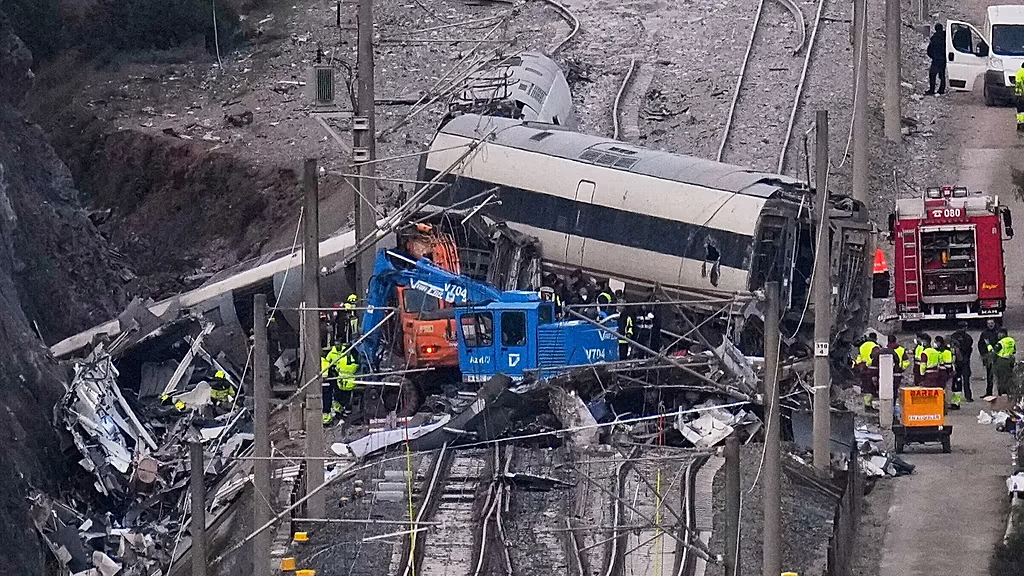
With renewed scrutiny, Spanish authorities have revealed that a railway track failure occurred a day before the catastrophic train collision that claimed 46 lives in Andalusia, Spain, raising serious concerns about rail safety and monitoring systems.
According to a report by Spain’s Civil Guard, the track where the January 18, 2026 disaster occurred had already broken on the evening of January 17 at approximately 9:46 p.m. Despite an electrical anomaly consistent with a break being recorded, the signalling system failed to trigger an alert due to configuration limitations and reliability concerns.
 The tragic accident involved a Madrid-bound high-speed train operated by private company Iryo, which derailed and crossed onto the opposite track, colliding with an oncoming train run by state operator Renfe. The impact resulted in one of Europe’s deadliest rail disasters in recent years, leaving 46 people dead and many others injured.
Investigators noted that unusual voltage variations were detected between the time of the track break and the crash, but the system in place did not flag the issue as critical. Authorities are now examining whether improved alert mechanisms could have prevented the tragedy.
The Civil Guard has ruled out sabotage, terrorism, and driver negligence as causes of the crash. Meanwhile, the official investigation by Spain’s railway accident commission (CIAF) remains ongoing, with final conclusions yet to be released.
The devastating loss of life has deeply affected communities across Spain, as families continue to mourn loved ones lost in the disaster. The tragedy has also sparked nationwide discussions about infrastructure safety and the urgent need for enhanced monitoring systems to prevent similar incidents in the future.
About the Author
